
Introduction: The Dream That Drives Millions
Every year, as the summer heat rises across India, over a million students prepare for the Joint Entrance Examination (JEE) – a gateway to premier engineering education. JEE is more than just a test; it’s a symbol of aspiration and determination. For decades, it has opened doors to the Indian Institutes of Technology (IITs), National Institutes of Technology (NITs), IIITs, IISc, and other top colleges. In this guide, we delve into JEE 2026, explaining its structure, pattern, preparation strategy, and everything you need to know to navigate this challenging journey.
What is JEE? Understanding the Two-Tier System
JEE is a two-stage national exam for engineering admissions:
- JEE Main: The first phase (conducted by the NTA) for admission to NITs, IIITs, GFTIs and many state and private colleges. It acts as a screening test for JEE Advanced.
- JEE Advanced: The second phase (conducted by an IIT) exclusively for IIT admissions. Only the top ~2.5 lakh candidates from JEE Main qualify.
Historically, JEE Main (formerly AIEEE) and IIT-JEE were separate exams. From 2013 onward, a unified JEE replaced them to streamline admissions. This two-tier system means students first take JEE Main; high scorers are then eligible for JEE Advanced. The JEE Main and Advanced system is managed by two different bodies: the National Testing Agency (NTA) for JEE Main, and an IIT (on rotation) for JEE Advanced.
JEE Main 2026: Your First Major Hurdle
Who Conducts JEE Main?
Since 2019, the National Testing Agency (NTA) – an autonomous body under the Ministry of Education – conducts JEE Main. NTA oversees exam conduct, registration, and scoring, ensuring standardized and transparent processes.

Eligibility Criteria: Who Can Apply?
To be eligible for JEE Main 2026, candidates must meet the following (as per official guidelines):
- Educational Qualifications: Passed Class 12 (or equivalent) in 2024 or 2025, or appearing in 2026. Subjects required are Physics and Mathematics (compulsory), and one of Chemistry/Biology/Biotechnology/Technical Vocational.
- Marks Required: Usually, a minimum aggregate (e.g. 75% in Class 12 for general category to get NIT/IIIT seats) or Top 20 percentile is needed. Exact percentages may vary by year.
- Age Limit: There is no upper age limit for JEE Main (NTA only requires you to have completed 12th in the specified years).
- Attempts: A candidate can attempt JEE Main for three consecutive years (6 attempts, since it’s held twice a year).
Pro Tip: Always check the latest NTA notification, as rules (especially percentage or attempt rules) can be updated.
Exam Pattern: What to Expect
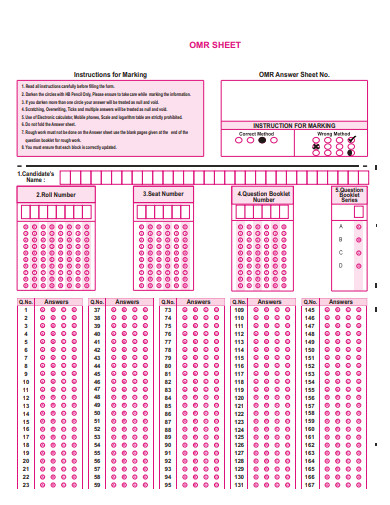
JEE Main (B.E./B.Tech Paper) is a Computer-Based Test (CBT) with 75 questions (300 marks) and 3 hours duration. The paper is divided into three subjects (Physics, Chemistry, Mathematics), each carrying 100 marks. Specifically, each subject has 25 questions: 20 Multiple Choice Questions (MCQs) and 5 Numerical Value Questions (NVQs). All questions are compulsory.
Exam Day: JEE Main is conducted on computers at designated centers. The B.Tech exam has 3 sections (PCM) with 75 total questions (20 MCQs + 5 numerical each). Each correct answer scores +4 marks, and each wrong MCQ attracts –1 mark. (Note: From 2025 onward, even wrong numerical answers incur –1 mark.) The exam lasts 180 minutes.
Marking Scheme:
- MCQs: +4 for correct, –1 for wrong.
- Numerical (NVQs): +4 for correct, –1 for wrong (no choice among extra, all 5 must be answered now).
- Unanswered: 0 marks.
Languages: JEE Main is offered in 13 languages: English, Hindi, Assamese, Bengali, Gujarati, Kannada, Marathi, Malayalam, Odia, Punjabi, Tamil, Telugu, and Urdu. This multilingual support ensures students across India can take the exam in their preferred language.
Marking Scheme: How Scoring Works
Scoring in JEE Main is straightforward. Every correct answer (MCQ or numerical) earns +4 marks, and an incorrect MCQ (and now even an incorrect numerical) loses 1 mark. No marks are deducted for unattempted questions. Thus accuracy is crucial: random guessing can hurt your score due to negative marking.
Note: If a candidate attempts more than 5 numerical questions in any subject, only the first 5 attempted will be evaluated; extra attempts beyond 5 are ignored.
Languages Available
To ensure fairness and accessibility, JEE Main is conducted in 13 languages. Aspirants can choose any one of these when registering.
JEE Advanced 2026: The Ultimate Challenge
Who Conducts JEE Advanced?
JEE Advanced is conducted by one of the IITs on a rotating basis. For 2026, IIT Roorkee is the organizing institute (as per official announcement). The exam date is usually in May; for 2026 it is scheduled (tentatively) on 17 May 2026.
Eligibility: Who Gets to Write JEE Advanced?
JEE Advanced is highly exclusive. To be eligible, a candidate must satisfy all of the following (details from the official JEE Advanced brochure):
- JEE Main Performance: Be among the top 2,50,000 candidates (across all categories) in JEE Main 2026. This is essentially the first filter.
- Age Limit: Born on or after October 1, 2001 (general category). There is a 5-year relaxation for SC/ST/PwD candidates.
- Number of Attempts: A maximum of two attempts in two consecutive years.
- Class 12 Qualifications: Passed Class 12 (or equivalent) in 2024 or 2025, or appearing in 2026. (Candidates who passed before 2024 are not eligible.)
- Previous Admission: Should not have already admitted into an IIT (with some exceptions).
Meeting the above does not guarantee admission; it just makes you eligible to sit for the exam. Only a limited number (~16000) of seats are available across all IITs, IIITs, etc.
Exam Pattern: The Unpredictable Challenge
JEE Advanced consists of two papers, each 3 hours long, and both are compulsory. Each paper covers Physics, Chemistry, and Mathematics and is computer-based. Importantly, the pattern can change every year, but generally it includes:
- Question Types: A mix of single-correct MCQs, multiple-correct MCQs, integer-type numeric questions, matching/pairing questions, and paragraph-based questions.
- Structure: Usually each paper has 3 sections (one per subject) with about 18 questions each (total ~54 questions).
- Marking Scheme: Complex – different sections have different scoring (full marks, partial marks, or negative marks depending on case). For example, some questions award partial credit for partially correct answers. The exact scheme is given with the exam paper each year.
Why JEE Advanced is Considered Tougher
- Conceptual Depth: Questions test a deep understanding of fundamentals, often requiring multi-step reasoning, not just rote formula use.
- Time Pressure: The level of difficulty is high, and candidates must solve complex problems under strict time constraints.
- Unpredictability: With no fixed pattern, students must be ready for any new question style each year.
- Elite Competition: You are competing with the nation’s best aspirants. Historically, only the top 0.1–0.2% (JEE Main ranks) get to sit for JEE Advanced.
Each of these factors makes JEE Advanced a true test of analytical and problem-solving ability.
Top Institutions Through JEE
Admissions via JEE Main:
- NITs: 31 National Institutes of Technology across India admit students through JEE Main.
- IIITs: 23 Indian Institutes of Information Technology use JEE Main ranks.
- GFTIs: About 40 other centrally funded technical institutes (GFTIs) accept JEE Main scores.
- State Engineering Colleges: Many states (e.g., Haryana, Maharashtra, Rajasthan) use JEE Main scores for admissions to their engineering colleges.
- Private Universities: Several top private and deemed universities (e.g. BITS Pilani via BITSAT, SRM via its own exam, etc.) may also consider JEE Main ranks.
Admissions via JEE Advanced:
- IITs: All 23 IITs (including newer ones) admit B.Tech/B.E. students through JEE Advanced.
- Other Institutes: Some other prestigious programs admit via JEE Advanced ranks. For example, IISc Bangalore admits a limited number of students to its Bachelor of Science (Research) and dual-degree courses through JEE Advanced. Similarly, certain seats in institutions like IIPE (Indian Inst. of Petroleum) or IIST (Indian Inst. of Space Technology) are filled via JEE Advanced.
Global Recognition: IIT/IISc degrees are internationally renowned. Graduates often pursue higher studies or research worldwide, reflecting the institutes’ global standing.
The Counselling Process: From Rank to Admission
JoSAA Counselling (IITs, NITs, IIITs, GFTIs)
After JEE results, the Joint Seat Allocation Authority (JoSAA) conducts counselling for all IITs, NITs, IIITs, and GFTIs. The process involves:
- Registration: Qualified candidates register on the JoSAA portal (using JEE application numbers). Both JEE Main and Advanced qualifiers do this.
- Choice Filling: Candidates list preferred institutes and engineering branches in order of preference.
- Mock Allotment: JoSAA publishes mock rounds so students can gauge probable allotments.
- Seat Allotment Rounds: Based on JEE rank and choices, seats are allotted in multiple rounds. NTA ranks determine who gets which institute. (JoSAA allocates NIT/IIIT/GFTI seats to JEE Main rankers, and IIT seats to JEE Advanced rankers.)
- Seat Acceptance: After each round, candidates must accept and freeze their seat (or opt to float/slide for better options).
- Document Verification: Admitted students must physically report to allotted institutes with required documents.
- Reporting to Institute: Final admission is confirmed once you complete all formalities at the institute.
Note: JoSAA counseling is common to both JEE Main and Advanced, but your rank in the appropriate exam stream determines which institutes you can enter.
CSAB Counselling (For Leftover Seats)
After JoSAA rounds, some seats (mostly in NIT+ system) may remain vacant due to withdrawals or unfilled quotas. The Central Seat Allocation Board (CSAB) steps in to fill these through special rounds. Key points:
- Who Conducts: CSAB (an IIT-dominated board under the Ministry) organizes CSAB Special Rounds (and DASA for foreign/NRI seats) after JoSAA.
- Process: CSAB counsels only candidates who registered separately with CSAB. Vacant seats in NITs, IIITs, and GFTIs are filled in these extra rounds.
- Document Verification: CSAB allotment requires fresh verification, unlike JoSAA which did it after seat allotment.
In summary, JoSAA covers the main counseling, and CSAB handles any remaining seats (ensuring virtually all seats are eventually filled).
Why JEE Matters: Beyond Just an Exam
Qualifying JEE (especially clearing JEE Advanced) grants entry into institutions that provide world-class engineering education. Benefits include:
- World-Class Curriculum and Faculty: IITs and NITs boast eminent professors and comprehensive curricula on par with top global universities. Undergraduate students get research exposure early.
- Exceptional Placements: Top tech and finance companies flock to IIT/NIT campuses. For example, IIT graduates report average packages in the ₹20–34 LPA range, with top offers often exceeding ₹1–2+ crore. NIT students also see excellent outcomes (average ~₹10–23 LPA, highest around ₹50+ LPA to ~₹1.25 Cr). Recruiters include Google, Microsoft, Goldman Sachs, Google, Flipkart, and many Fortune 500 companies.
- Alumni Network: IIT/NIT alumni include CEOs of global companies (e.g. Sundar Pichai of Google, Arvind Krishna of IBM), noted entrepreneurs, scientists, and leaders. This network can open doors in career and research.
- Research & Innovation: These institutes have strong emphasis on research – state-of-the-art labs, funded projects, collaborations, and opportunities to publish research papers even as undergraduates.
- Global Recognition: An IIT or top NIT degree is respected worldwide, easing admission to foreign universities or jobs abroad. (Joint programs and international collaborations are common.)
In short, cracking JEE can set the stage for a highly rewarding career in engineering or science.
JEE Syllabus: What You Need to Study
The JEE syllabus is largely based on NCERT Class 11 and 12 Physics, Chemistry, and Mathematics. Major topics include:
- Physics: Mechanics, Thermodynamics, Electromagnetism (E&M), Optics, Modern Physics (nuclear & atomic).
- Chemistry: Physical Chemistry (mole concept, equilibrium, kinetics), Organic Chemistry (basic reactions/mechanisms, biomolecules), Inorganic Chemistry (periodic table, coordination compounds).
- Mathematics: Algebra (including complex numbers, sequences), Calculus (differentiation/integration), Coordinate Geometry (lines, circles, conics), Trigonometry, Probability & Statistics.
Toppers emphasize that a strong foundation in NCERT fundamentals is crucial. Once basics are mastered, advance to challenging problems (from books like H.C. Verma, Irodov, etc.). Key topics to focus on are listed in exam prep guides (for example: Mechanics and E&M in Physics; Mole Concept, Coordination Chemistry in Chemistry; Calculus and Algebra in Math). Always cross-check with the official NTA syllabus to avoid surprises.
Preparation Strategy: The Road to Success
When to Start Preparation?
- Class 11: Build strong fundamentals. Focus on concept clarity in Physics, Chemistry, Math.
- Class 12: Continue building knowledge; solve more advanced problems. Make revision notes of 11th topics. Balance board exams and JEE prep, since syllabi overlap.
- Possible Drop Year: If needed, some students take a “drop” year after 12th to revise intensively, giving a second attempt.
Expert advice is to start early (e.g. Class 11), focusing first on NCERT basics. As one student famously said, “JEE prep is a marathon, not a sprint.” Regular, consistent study beats last-minute cramming.
Study Plan Components
- Conceptual Clarity: Don’t rote-memorize formulas. Understand derivations and logic. NCERT textbooks should be your base.
- Regular Practice: Solve daily problems. Mix easy, medium, and tough questions. Use high-quality problem books (HC Verma for Physics, OP Tandon for Chemistry, RD Sharma/ML Khanna for Math).
- Revision Cycles: Periodically revise old topics to keep them fresh. Short notes and flashcards help.
- Mock Tests: Take full-length mock exams in exam-like conditions. Analyze your mistakes thoroughly. Mock tests help in time management and reducing exam anxiety.
- Performance Analysis: Keep track of weak areas from tests and work to improve them. Peer discussions or teacher help can clarify doubts.
Recommended Books
- Physics: Concepts of Physics (H.C. Verma), Problems in General Physics (I.E. Irodov) for practice, NCERT text.
- Chemistry: NCERT (especially Organic and Inorganic), Physical Chemistry by O.P. Tandon, M.S. Chouhan for Organic, J.D. Lee for Inorganic.
- Mathematics: RD Sharma or R.S. Aggarwal for basics, ML Khanna, Arihant series for advanced problems, plus thorough NCERT.
Time Management Tips
- Timetable: Create a realistic daily schedule covering all subjects. Include small breaks.
- Strengths/Weaknesses: Spend more time on weaker subjects, but don’t ignore strong ones.
- Balance: Include leisure time and physical activity – burnout is counterproductive.
- Sleep: Aim for 7–8 hours sleep. A fresh mind learns much better.
- Adapt: If some plan isn’t working, tweak it (e.g., spend more time on difficult topics).
Common Mistakes to Avoid
- Ignoring NCERT fundamentals.
- Focusing only on easy problems (neglecting challenging ones).
- Not revising regularly, so forgotten concepts keep accumulating.
- Skipping mock tests or not analyzing errors.
- Comparing yourself constantly to others (each student is different).
Mental Health and Stress Management
JEE preparation can be grueling, but your well-being matters most. Keep perspective: an exam result does not define your worth. Key strategies for managing stress include:
Regular Exercise: Even 20–30 minutes of daily exercise (yoga, jogging, sports) relieves stress and boosts mood.
- Adequate Sleep: Ensure 7–8 hours nightly. Sleep is vital for memory consolidation and focus.
- Healthy Diet: Eat balanced meals; avoid excessive caffeine. Good nutrition supports brain function.
- Relaxation/Meditation: Short meditation or breathing exercises daily can calm nerves.
- Hobbies: Don’t abandon activities you love. Drawing, music, or any hobby can provide a mental break.
Stay connected with friends and family for support. If needed, consider talking to a counselor. Remember, many successful engineering students have faced ups and downs—resilience and self-care are as important as study hours.
Recent Trends and Changes
Digital Transformation
- Online Exams: JEE Main is fully computer-based.
- E-Counselling: JoSAA/CSAB processes are online.
- Digital Scorecards: Results and cut-offs are published on official websites (JEE Main/Adv/NTA).
- Preparation Tools: AI-based apps and online test series have become popular. For example, adaptive learning platforms use AI to suggest practice problems based on your weak areas.
Pandemic Impact
The COVID-19 pandemic brought temporary changes:
- JEE Main was held four times a year (2021–22) to offer flexibility. This has since reverted; from 2025 onward it’s back to two sessions.
- Optional Questions (2021–24): During COVID-affected years, JEE Main introduced optional numeric questions (10 NVQs, answer any 5). NTA removed that optional format from 2025, returning to all 5 NVQs compulsory (pre-pandemic style).
- Safety Measures: During the pandemic, strict hygiene and distancing were enforced in exam centers. Now these have been lifted, but exam centers may still require COVID precautions if needed.
Future Expectations
While no major changes are announced yet, experts suggest:
- Application-based Questions: More emphasis on conceptual and applied questions rather than rote.
- Environmental Awareness: Some examiners propose including basic science questions related to ecology or sustainability.
- AI in Prep: Expect more AI-driven study tools (e.g., personalized mock tests, chatbots for doubt clearing).
- Stay tuned to official NTA/JEE Advanced notifications for any announcements.
Financial Aspects: Cost of Preparation and Education
Preparation Costs
- Coaching Fees (Optional): Can range from ₹40,000 to ₹250,000 per year for premium classroom coaching (e.g. Kota, Delhi centers). Online courses may be lower (~₹5,000–1,16,000 per year) depending on quality.
- Study Materials: Books and test series may cost ₹10,000–20,000 total.
- Miscellaneous: Travel to coaching or test centers, exam application fees (~₹1000–2000), stationery, etc.
Education Costs at Top Institutes
- IITs: The fees for an IIT B.Tech are relatively low (roughly ₹2–3 lakh for the entire 4-year program, including tuition and mess fees). Government scholarships and tuition waivers are available for many needy/meritorious students.
- NITs: Total cost for a 4-year B.Tech is around ₹5–7 lakhs (including hostel/mess). Again, scholarships exist.
- Despite being prestigious, IIT/NIT education is highly subsidized by the government. Monthly living expenses (hostel) are modest compared to private colleges.
In short, while coaching and exam prep can be expensive, an IIT/NIT education has reasonable costs and potentially very high returns in terms of future salary.
Alternative Paths: If Not Through JEE
While JEE is the most famous route, there are many other options:
- Other Engineering Exams: For example, BITSAT (BITS Pilani), VITEEE (VIT), SRMJEEE, and various state-level exams (e.g., AP EAMCET, MHT-CET). These lead to other top engineering colleges.
- Alternative Careers: If engineering via JEE isn’t your path, science students can pursue pure sciences (B.Sc, research), commerce/business (BBA, B.Com, CA), or humanities. Many enter fields like data science, law, or design from non-engineering backgrounds.
- Vocational/Skill Courses: Institutes like IIITs/Polytechnics/ITI offer diplomas and degrees focused on specific skills (software, electronics, mechanics) without requiring JEE. Technical education has many branches beyond the IIT/NIT system.
Remember, success is not defined by one exam. There are diverse rewarding careers; engineering is just one path.
Success Stories: Inspiration from Toppers
Common Traits Among Toppers
- Consistency: Daily study habits over months/years.
- Smart Work: Focus on understanding and practice, not just hard labor.
- Time Management: Efficient use of time and balancing all subjects.
- Resilience: Learning from mistakes and bouncing back from setbacks.
- Support: Guidance from mentors, family encouragement, and peer learning.
What Toppers Say
In interviews, JEE toppers often emphasize:
- NCERT First: Thoroughly read and understand NCERT textbooks before moving to advanced problems.
- Self-Study: Personal practice is as crucial as coaching; many top rankers studied diligently on their own.
- Mock Tests are Key: Regular full-length mocks help with exam temperament and time skills.
- Health Matters: Good sleep and a calm mind are non-negotiable.
These insights underline that preparation is holistic: academics, strategy, and health.
Frequently Asked Questions (FAQs)
- Q: How many hours should I study daily?
A: Quality over quantity. Effective focus for 6–8 hours is better than 12 hours with distractions. Take short breaks during study sessions. - Q: Is coaching necessary for JEE?
A: Not strictly. Coaching provides structure and expert guidance, but many students clear JEE with self-study. Discipline, good books, and guidance (online or offline) matter most. - Q: Can I prepare for JEE alongside board exams?
A: Yes. The syllabi overlap significantly. An integrated approach can work, but time management is key – plan so that revisions cover both board and JEE topics. - Q: What’s a good rank in JEE?
A: “Good” depends on your goals. For top IITs (e.g., CSE, ECE), aim for AIR < 1000. For decent NIT seats, AIR < 20,000 is usually safe. Check previous-year cut-offs of colleges you want. - Q: How do I handle exam stress?
A: Take regular breaks, exercise, talk with friends/family, and keep things in perspective. Meditation or deep-breathing can help. Remember: one exam will not define your future.
Important Dates for JEE 2026 (Tentative)
- JEE Main 2026 Session 1: January 21–29, 2026
- JEE Main 2026 Session 2: April 2–9, 2026
- JEE Main Session 1 Result: Around May 2026
- JEE Advanced 2026: May 17, 2026 (tentative)
- JEE Advanced Result: June 2026
- JoSAA Counselling: June–July 2026 (multiple rounds)
- CSAB Special Counselling: July–August 2026 (if needed)
Note: Dates are indicative. Always check official NTA and IIT websites (JEE Main, JEE Advanced) for exact schedules when released.
Official Websites and Resources
- JEE Main (NTA): jeemain.nta.nic.in
- JEE Advanced: jeeadv.ac.in
- NTA (official info): nta.ac.in
- JoSAA (counselling): josaa.nic.in
- CSAB (special rounds): csab.nic.in
These sites publish official brochures, forms, results, and notifications. Use them to verify any information.
Conclusion: The Journey Matters as Much as the Destination
Cracking JEE is undoubtedly tough, but the preparation journey builds valuable life skills: discipline, perseverance, problem-solving, and time management. Whether or not you get the exact rank you hope for, you emerge stronger and more capable. Remember to maintain balance – health and mindset are as crucial as study hours.
Success in JEE is a combination of hard work and smart strategies: focus on understanding concepts, practice diligently, take mock tests, and learn from each test. Stay motivated but not stressed; many paths lie ahead in engineering and beyond.
Believe in yourself, keep consistent, and take care of your well-being. If you commit to the process, JEE 2026 can be conquered. And even if life takes you on a different path, the effort you invest in this journey will serve you well in any future endeavor.
Best wishes for your preparation!